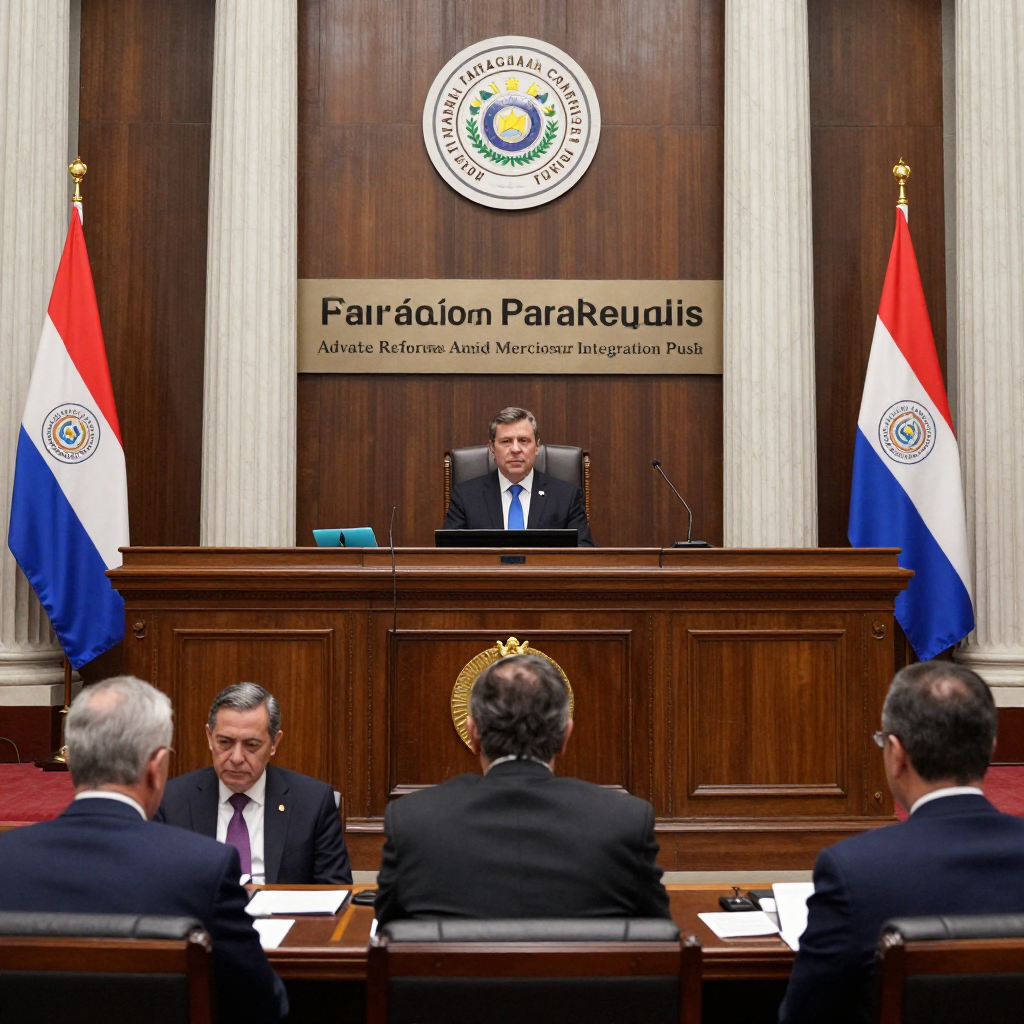
Asunción, Paraguay — In a move that could significantly impact its integration with Mercosur and broader global markets, the Paraguayan Congress recently passed a series of legislative reforms aimed at modernizing the country’s trade regulations. These changes come amid growing recognition of the need for Paraguay to position itself as a more competitive and attractive destination for foreign investment. With an economy heavily reliant on agribusiness and energy exports, these reforms signal a shift towards greater openness and alignment with regional standards.
The proposed legislation focuses on streamlining customs procedures, reducing bureaucratic hurdles for importers and exporters, and enhancing transparency in public procurement processes. According to reports, these measures aim to reduce average tariffs on key goods, making it easier for Paraguay to compete within Mercosur and beyond. Analysts suggest that such reforms could attract investments from multinational corporations looking to leverage Paraguay’s strategic location as a gateway to South American markets.
Economic experts have noted that while these reforms hold promise, their success will depend on effective implementation and the ability to address longstanding issues such as corruption and infrastructure challenges. The Paraguayan government has signaled its commitment to fostering partnerships with private sector stakeholders to ensure smooth adoption of the new measures. This collaborative approach is seen as crucial for maintaining investor confidence and ensuring compliance across various sectors.
For businesses already operating in Paraguay, particularly those involved in agriculture, textiles, and energy, the reforms offer opportunities for expansion. Additionally, the move aligns with Paraguay’s efforts to diversify its export base and reduce dependency on traditional commodities. However, economists also caution that the effectiveness of these reforms will rely heavily on Paraguay’s ability to maintain macroeconomic stability, manage inflation, and overcome internal political dynamics.
As Paraguay seeks to balance domestic interests with its obligations as a Mercosur member, the reforms reflect a broader strategy to integrate more deeply with regional and global trade frameworks. While the short-term impacts may not be immediately visible, analysts anticipate that over time, these measures could solidify Paraguay’s role as a key player in the Mercosur economic bloc and open avenues for increased collaboration with European and Asian markets.