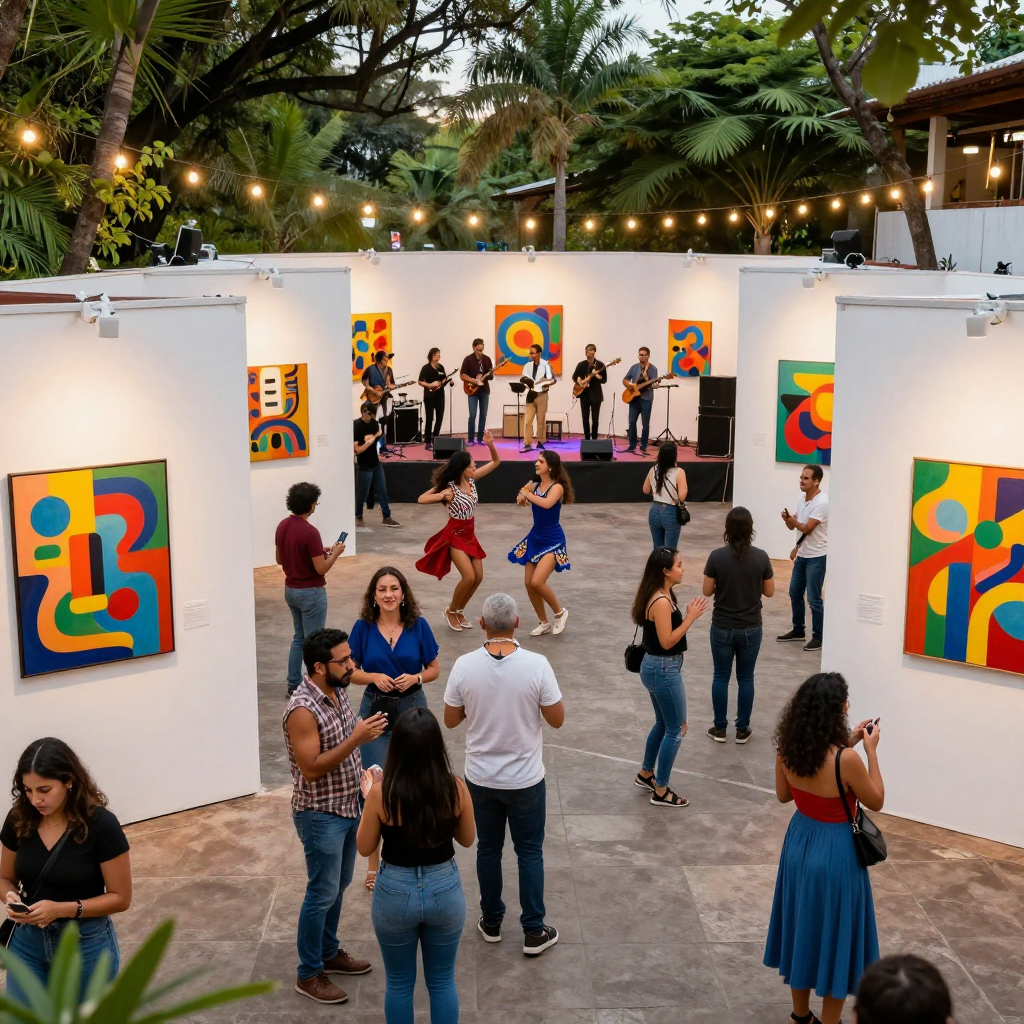
Asunción, Paraguay — Over the past year, Paraguay has witnessed a resurgence in its cultural landscape, with artists, musicians, and designers gaining increasing recognition both domestically and abroad. This burgeoning cultural movement is being driven by a combination of government support, private investment, and growing interest from international markets. According to experts, the country’s strategic position within the Mercosur bloc could make it a key player in cultural trade across South America.
One of the most notable developments is the rise of contemporary art in Paraguay. Exhibitions such as the annual Asunción Art Fair have attracted significant attention from collectors and galleries worldwide. This event, now in its eighth edition, showcases emerging local talent alongside established artists, highlighting themes that resonate with global audiences. "The success of these exhibitions points to a shift in how Paraguay is perceived globally," said Dr. Maria Barreto, Director of the National Museum of Fine Arts. "We are moving beyond traditional stereotypes to present a more diverse and dynamic cultural narrative."
In addition to visual arts, Paraguay’s music scene is also experiencing a revival. Traditional genres like polka and comparsas are being reinvented by young artists who blend them with modern elements, appealing to younger demographics both locally and internationally. Bands like Los Guarani and Grupo Tres are leading this cultural fusion, exporting their music across Mercosur countries and even into Europe. "Paraguay’s unique musical heritage offers a competitive edge in the global market," noted Juan Perez, CEO of Asunción Records, a prominent local label. "Our partnership with Brazilian and Argentine distributors has already expanded our reach significantly."
Education plays a crucial role in nurturing this cultural growth. In collaboration with the Ministry of Culture, universities across Paraguay are introducing programs focused on arts management, digital storytelling, and multimedia production. This educational investment is aimed at equipping the next generation with skills to navigate the evolving creative industries. "Cultural education is integral to economic development," explained Dr. Carlos Almeida, Dean of the School of Arts at the National University of Asunción. "By training local talents, we ensure that the cultural boom is sustainable and capable of driving innovation."
From a business perspective, this cultural renaissance presents several opportunities for investors. The tourism sector, already a cornerstone of Paraguay’s economy, could further benefit from cultural attractions, drawing visitors interested in art, music, and culinary experiences. Additionally, the potential for cross-border collaborations within Mercosur—especially with Brazil and Argentina, two of the region’s cultural powerhouses—offers avenues for joint ventures and co-productions. Analysts suggest that Paraguay could become a key link in the cultural supply chain, acting as a bridge between Latin America and international markets.
However, challenges remain. Infrastructure constraints, limited funding, and the need for greater institutional support continue to hinder the full realization of Paraguay’s cultural potential. Addressing these issues will require concerted efforts from both the public and private sectors. Despite these hurdles, the momentum behind Paraguay’s cultural movement is undeniable, signaling a promising future for the country in the global cultural landscape.