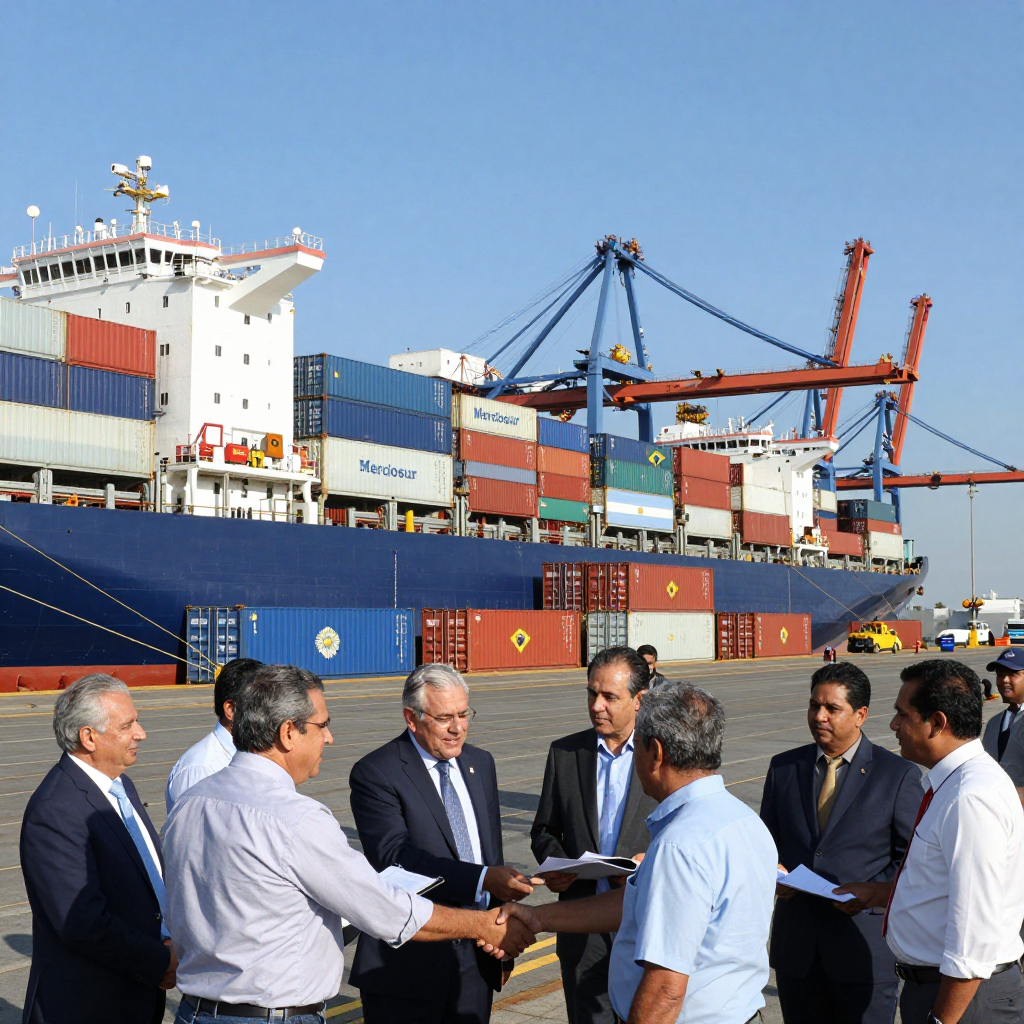
ASUNCIÓN, Paraguay – In a significant stride towards enhancing its economic standing, Paraguay has been actively expanding its trade relations within Mercosur, the Southern Common Market. This strategic move comes at a time when the country is witnessing robust economic indicators that reflect growing stability and investor confidence. According to recent data from the Ministry of Finance, Paraguay’s GDP growth rate is projected to remain steady at around 4% in 2023, driven primarily by strong agricultural exports and increasing industrial activity.
Mercosur, which comprises Argentina, Brazil, Paraguay, Uruguay, and Venezuela (currently suspended), serves as a crucial platform for Paraguay to enhance its market access and economic opportunities. The latest developments show that Paraguay has been focusing on aligning its trade policies with Mercosur's broader objectives, particularly in areas such as agribusiness, manufacturing, and energy sectors. This alignment is vital as Paraguay seeks to capitalize on its geographic position as a bridge between South America and international markets.
Agriculture remains one of Paraguay's key economic pillars, accounting for approximately 20% of its GDP. With a focus on soybean and corn production, the country has seen increased demand from Mercosur partners, particularly Brazil and Argentina, which rely heavily on grain imports. This trend is expected to continue, given rising global food prices and tightening supply chains. Additionally, Paraguay has been actively promoting its agrifood sector through various initiatives, including the development of value-added products and sustainable farming practices.
In terms of foreign direct investment (FDI), Paraguay is attracting interest from both regional and global players. Recent reports indicate that investments in infrastructure projects, particularly in logistics and transportation, have surged, reflecting investors' optimism about the country's untapped potential. For instance, the expansion of ports along the Paraná River is set to improve Paraguay’s connectivity with Mercosur markets and beyond, reducing transportation costs and boosting export competitiveness.
Moreover, Paraguay's participation in Mercosur has also opened avenues for greater cooperation in energy security. The country is exploring opportunities to integrate its hydroelectric power generation capabilities into regional grids, leveraging its significant hydropower resources. This move not only enhances energy efficiency but also positions Paraguay as a reliable supplier within the Mercosur framework.
However, challenges persist. Political stability and regulatory reforms remain critical factors. While Paraguay has shown progress in improving its business environment, ongoing efforts to streamline bureaucratic processes and enhance legal certainty are necessary to fully unlock its economic potential. Additionally, navigating the complexities of Mercosur negotiations requires close collaboration among member states, as trade disputes and policy differences can sometimes impede progress.
Analysts believe that Paraguay’s commitment to regional integration is paying dividends, evidenced by its growing role in Mercosur trade dynamics. As the country continues to refine its economic strategies and attract external support, it is optimistic about achieving sustained growth in the coming years. With a focus on diversifying its export base, bolstering infrastructure, and strengthening institutional frameworks, Paraguay is well-positioned to capitalize on its unique strengths and capitalize on Mercosur's evolving landscape.
In conclusion, Paraguay’s emphasis on trade and investment within Mercosur signals a positive trajectory for its economy. By leveraging its natural resources, strategic location, and improved business climate, the country is poised to play a more significant role within the Southern Common Market while benefiting from enhanced global market access.