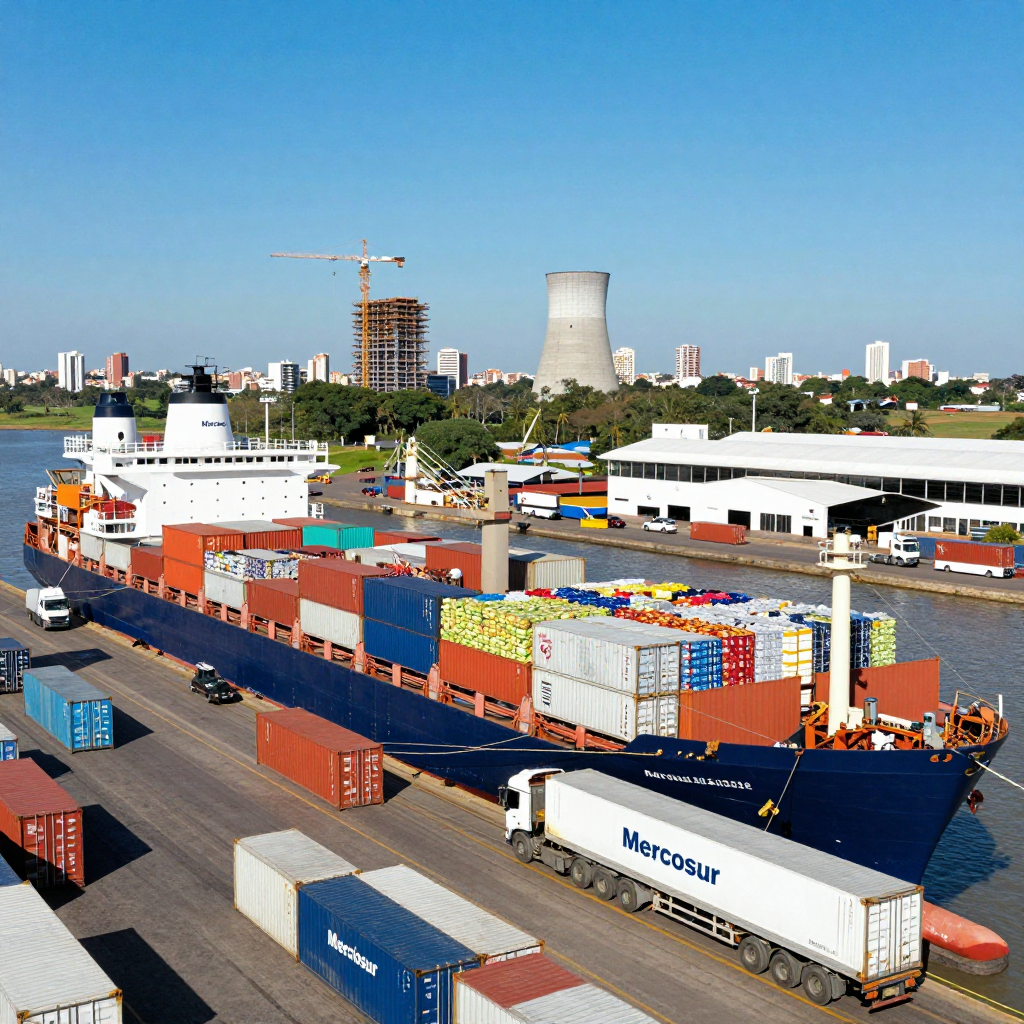
Asunción, Paraguay - In recent months, Paraguay has emerged as a key player within the Mercosur bloc, showcasing notable progress in its economic trajectory. Driven by strategic trade policies and enhanced integration efforts, the South American nation is witnessing improvements in various economic indicators, signaling a positive outlook for both domestic businesses and international investors.
The central narrative around Paraguay's economic resurgence revolves around its deepening ties within Mercosur. The country's membership in the regional trading bloc has facilitated increased access to neighboring markets, particularly Brazil and Argentina. This integration has been crucial for Paraguay's manufacturing sector, which has seen a rise in exports of agricultural products, textiles, and light manufacturing goods. According to data from the Ministry of Industry and Trade, exports to Mercosur countries have grown by approximately 12% year-over-year, contributing significantly to the national GDP.
Additionally, Paraguay's commitment to infrastructure development has attracted significant foreign investment. Notable projects include the expansion of the Yacyreta Hydroelectric Power Plant, a joint venture with Argentina, which aims to increase energy production and boost cross-border trade. Analysts at the Asunción Economic Research Center note that these investments not only enhance local capacity but also position Paraguay as a more attractive market for global investors seeking opportunities in renewable energy and logistics.
On the policy front, the Paraguayan government has implemented structural reforms aimed at improving the business environment. Measures such as streamlining bureaucratic processes and reducing regulatory hurdles have been pivotal in attracting foreign direct investment (FDI). Recent amendments to the Investment Law have further bolstered investor confidence by offering greater protection and incentives for foreign entities. These initiatives have led to an influx of capital, particularly in sectors like agribusiness, technology, and services.
However, challenges remain. While Mercosur integration offers substantial benefits, Paraguay continues to face logistical constraints, including limited transportation networks and border inefficiencies. These issues could potentially dampen the full realization of trade potential unless addressed through coordinated regional and domestic solutions. Moreover, global uncertainty and changes in trade dynamics, especially in light of evolving geopolitical tensions, pose risks to the sustainability of current growth trends.
In summary, Paraguay's economic recovery is gaining momentum, driven by strategic alliances within Mercosur and targeted investments in critical infrastructure. As the nation continues to refine its economic policies and capitalize on regional opportunities, it stands poised to play a more significant role in shaping the future of trade and investment in South America. Observers anticipate that continued progress will further solidify Paraguay's position as a desirable destination for both regional and international commerce.