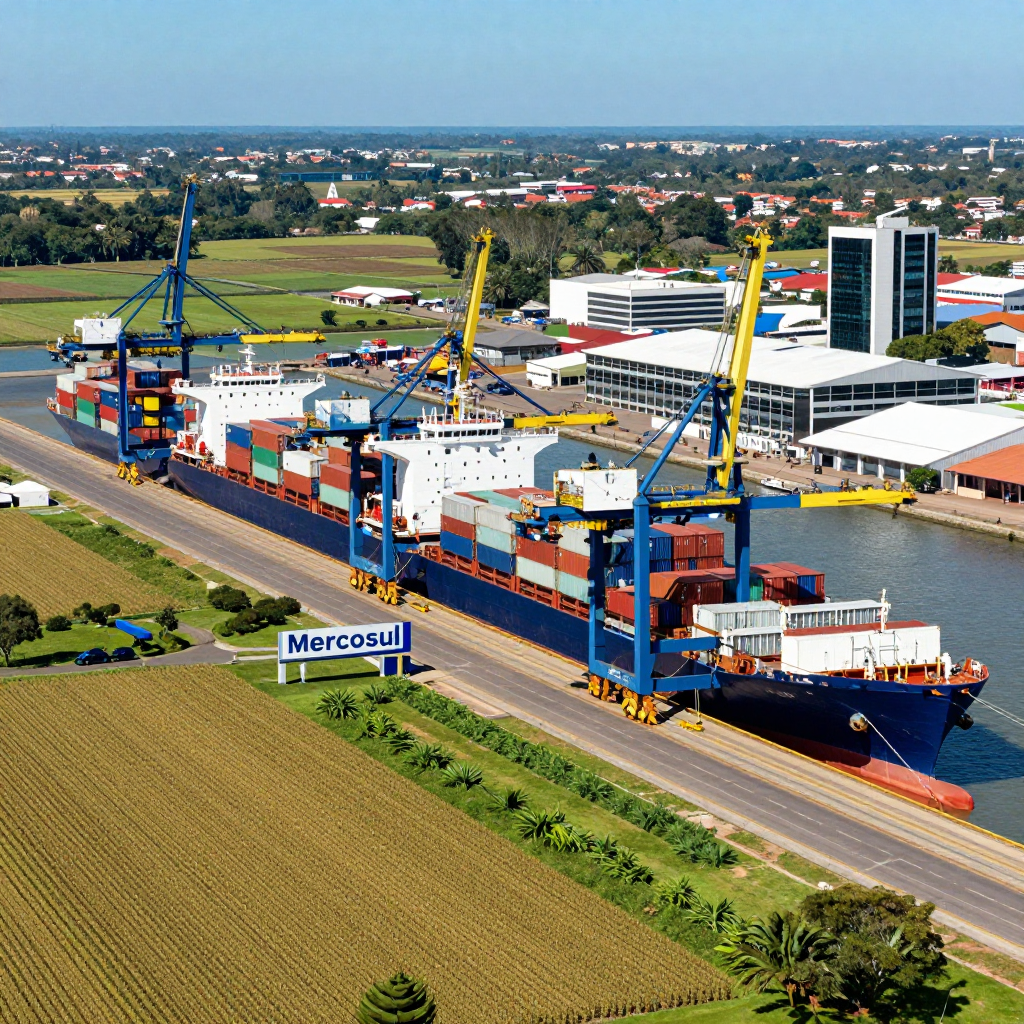
Asunción, Paraguay — Paraguay’s economy continues to show promising signs of recovery and growth, driven largely by its integration into regional markets and key economic reforms. The latest economic indicators point to a stable macroeconomic environment, with GDP growth projected at around 4% for the year, driven by robust performance across its primary sectors: agriculture, manufacturing, and services.
Mercosur, the Southern Common Market, remains a critical platform for Paraguay’s economic strategy. The country has strategically positioned itself as a gateway for Mercosur commerce, benefiting from its border access to Brazil, Argentina, and Bolivia. This geographic advantage has facilitated increased trade volumes, particularly in agricultural exports and industrial goods. According to the Ministry of Industry and Commerce, Paraguay’s exports to Mercosur member countries have risen by approximately 8% over the past year, reflecting stronger market integration and supply chain efficiencies.
Agriculture remains a cornerstone of Paraguay’s economy, accounting for about 25% of GDP. Soybean production, in particular, has seen significant increases due to improved yields and favorable global demand. Analysts from the World Bank note that Paraguay’s focus on sustainable agricultural practices could further enhance its competitive edge in export markets. Recent investments in irrigation infrastructure, supported by the government and private sector partnerships, have also contributed to greater productivity and resilience against climate variability.
Infrastructure development is another key area where Paraguay is making strides. The government’s ongoing efforts to modernize transportation networks—such as road and rail improvements—aim to streamline logistics and reduce costs for businesses operating within and outside Mercosur. These initiatives are expected to attract more foreign direct investment (FDI), which has already shown positive trends, increasing by roughly 7% in 2023 compared to the previous year. Major sectors receiving FDI include energy, telecommunications, and agribusiness.
Energy development is also gaining momentum, with Paraguay leveraging its hydroelectric resources to secure energy independence and explore export opportunities. The Yacyretá Dam, one of the largest binational hydroelectric projects in South America, provides significant electricity surplus that Paraguay can utilize domestically and potentially export. Renewable energy initiatives, including solar and wind power, are also being explored as part of the country’s diversification strategy. International investors are increasingly eyeing these opportunities, drawn by Paraguay’s commitment to sustainable energy policies and its favorable regulatory environment.
From a political standpoint, Paraguay’s government has been proactive in creating a business-friendly ecosystem. Efforts to simplify bureaucratic processes, streamline customs procedures, and improve transparency have received praise from both domestic and international stakeholders. These measures aim to enhance investor confidence and ensure compliance with global best practices in corporate governance and anti-corruption frameworks.
Overall, Paraguay presents a compelling case for business engagement within the Mercosur region. Its strategic location, combined with strong sectoral performance and forward-looking policies, positions the country as a dynamic player in regional and global trade. While challenges remain, including addressing income inequality and strengthening institutional capacity, Paraguay’s trajectory suggests a promising outlook for businesses seeking opportunities in a growing South American market.