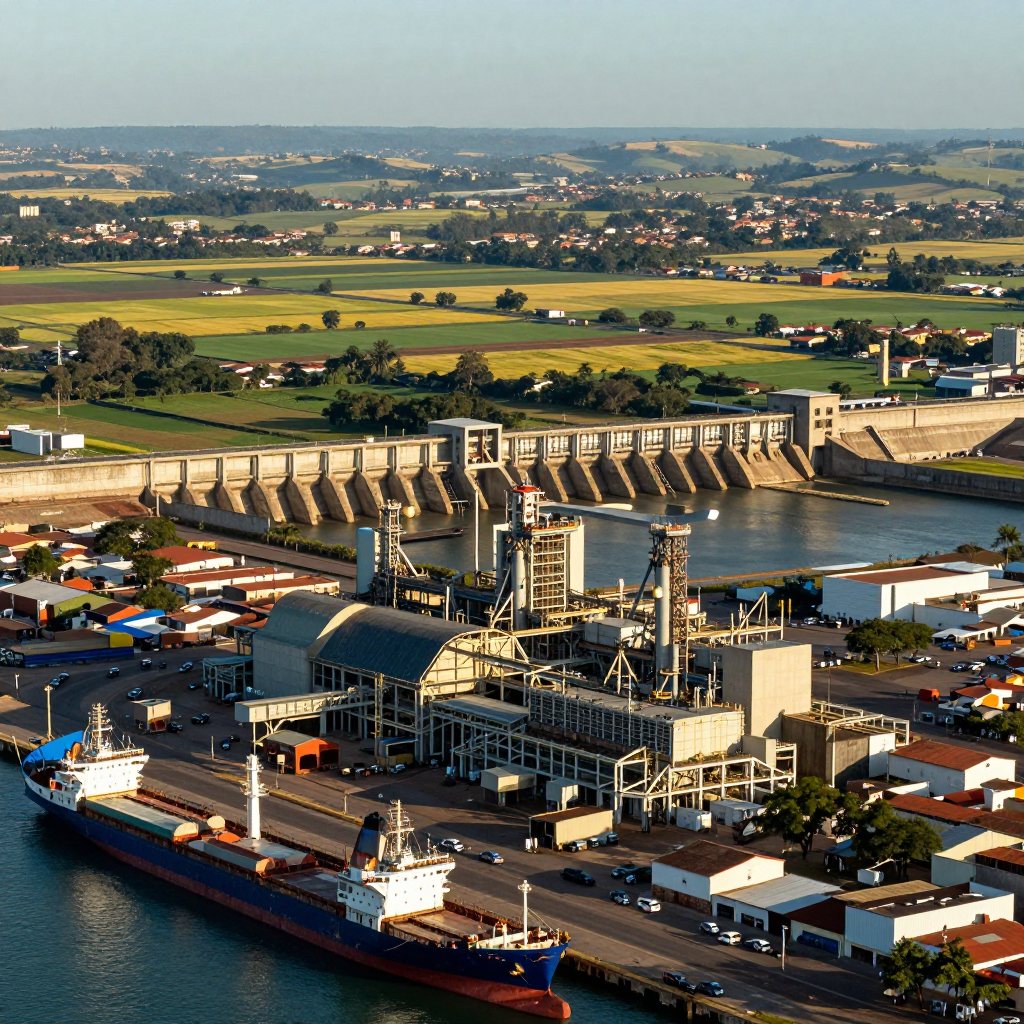
Paraguay, the landlocked South American nation nestled between Brazil, Argentina, and Bolivia, is emerging as a promising destination for international businesses seeking to capitalize on its burgeoning economy and strategic trade opportunities. Recent data from the Central Bank of Paraguay indicates that the country’s GDP has shown steady growth over the past year, driven primarily by improvements in agriculture, energy exports, and increased foreign direct investment (FDI). These trends are reflective of Paraguay's commitment to leveraging its natural resources and strategic geographic location to boost economic activity.
As a member of Mercosur, Paraguay is at the forefront of regional trade discussions, which have gained momentum following renewed negotiations betweenMercosur countries and key global markets such as the European Union. The organization’s efforts to bolster free trade agreements and streamline customs procedures are expected to further enhance Paraguay's appeal to international investors. The country's participation in Mercosur, alongside Brazil, Argentina, Uruguay, and Venezuela, allows it to tap into a market of over 280 million consumers with a combined GDP exceeding $2 trillion, providing significant export opportunities.
Within Paraguay itself, the energy sector has experienced notable growth, particularly in hydroelectric power, where large-scale projects such as the Yacyreta Dam and Itaipu Dam contribute significantly to both domestic consumption and export potential. This sector not only supports national revenue but also attracts infrastructure investment from multinational companies looking to expand their renewable energy portfolios. Additionally, Paraguay's agricultural sector continues to be a cornerstone of its economy, with soybeans, cotton, and cattle products leading export categories. Efforts to modernize farming practices and improve supply chain efficiency are positioning the country as a reliable supplier to global markets.
However, challenges remain as Paraguay navigates the complexities of regional integration. Logistics hurdles due to its landlocked status, while mitigated through strong relationships with neighboring countries, continue to pose a logistical challenge. Moreover, the need for improved regulatory frameworks and greater transparency in government procurement processes has been highlighted by business leaders as areas requiring reform to fully unlock Paraguay’s economic potential. Despite these obstacles, the country’s proactive engagement in Mercosur initiatives, such as the recent push for digital trade standards and sustainable energy partnerships, signals a forward-looking approach to economic development.
Analysts suggest that Paraguay's strategic positioning within Mercosur could lead to further economic diversification and resilience in the coming years. By continuing to emphasize trade liberalization, infrastructure development, and sustainable investments, the nation aims to solidify its role as a key player in regional and global commerce. As international interest in Mercosur grows, Paraguay stands poised to capitalize on these dynamics, offering businesses a gateway into both local and broader Latin American markets.