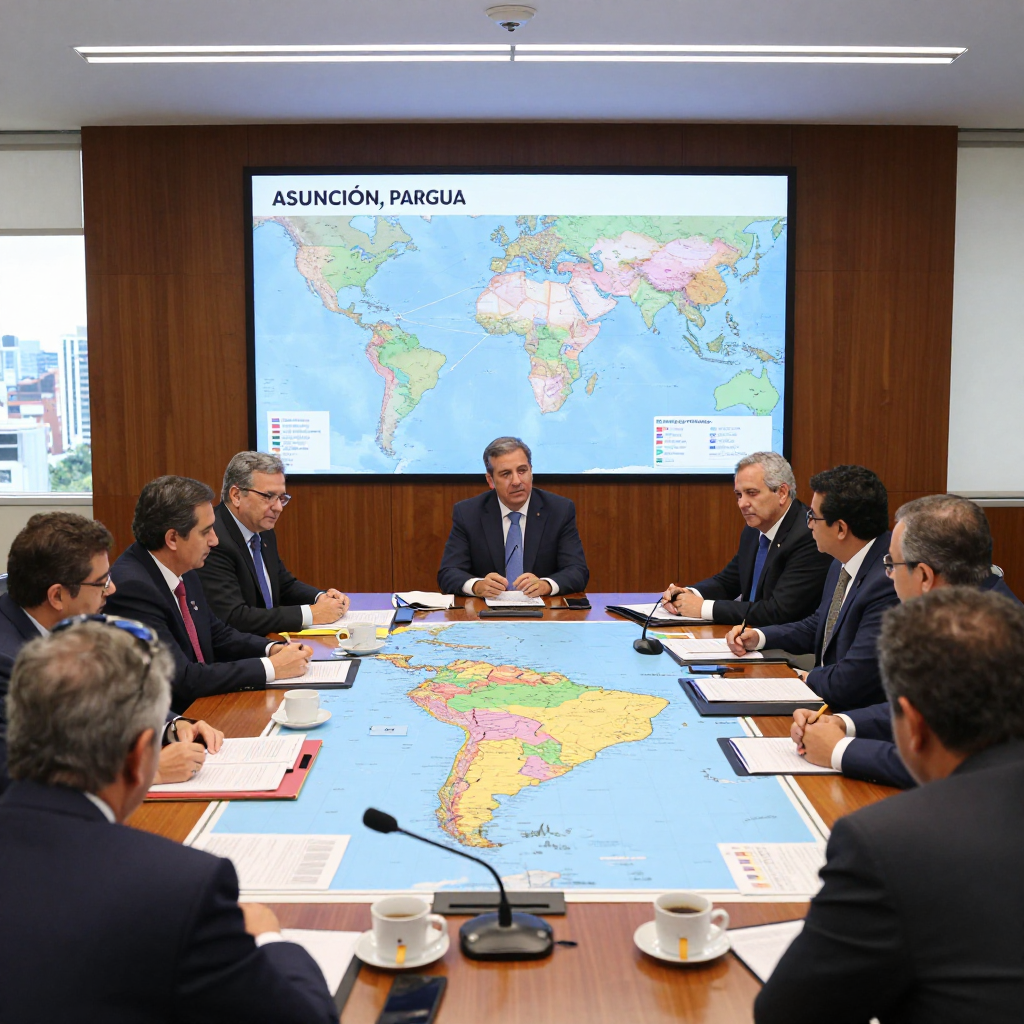
Asunción, Paraguay—In recent months, the Common Market of the South (Mercosur) has been actively pursuing strategic partnerships with key global economies, aiming to diversify its trade relationships beyond traditional markets. This shift has significant implications for Paraguay, a founding member of the bloc, which is leveraging these developments to boost its economic prospects and strengthen its role within the region.
Mercosur's renewed focus on global trade agreements comes amidst a backdrop of shifting geopolitical dynamics. The bloc, which includes Argentina, Brazil, Paraguay, Uruguay, and Venezuela (suspended since 2016), has long served as a cornerstone for regional integration in South America. However, recent diplomatic efforts indicate a desire to extend its influence internationally, particularly targeting Asia-Pacific markets and European Union countries. These initiatives could provide a much-needed boost to Paraguay's export sector, which heavily relies on agricultural products such as soybeans, beef, and timber.
According to analysts at the Paraguayan Chamber of Commerce, the country stands to benefit from increased diplomatic engagement due to its strategic location and competitive production costs. "Paraguay is uniquely positioned to act as a gateway for Mercosur goods entering global markets," said Dr. Claudia Acevedo, an economist specializing in regional trade. "By aligning with broader Mercosur strategies, we can attract foreign investors looking for stable and efficient logistics hubs."
The Paraguayan government has already taken steps to support this vision. In late 2023, it announced plans to modernize key ports and improve road infrastructure to facilitate trade flows. Additionally, President Mario Abdo Benítez has emphasized the importance of strengthening bilateral ties with key trading partners, particularly those seeking sustainable sourcing alternatives. "Our commitment to environmental standards and fair labor practices makes Paraguay an attractive option for businesses committed to ethical trade practices," he stated during a recent address to the National Congress.
While these developments present promising opportunities, challenges remain. Paraguay continues to grapple with internal economic issues, including inflationary pressures and a reliance on commodities that make the country vulnerable to global market fluctuations. Moreover, securing favorable terms in any new trade agreements will require careful negotiation, especially concerning sensitive sectors like agriculture, where competing interests within Mercosur may arise.
Despite these hurdles, there is optimism among business leaders that Paraguay's proactive stance could yield tangible results. "We are seeing a growing interest from multinational corporations keen on establishing bases in Paraguay to serve both domestic and regional markets," noted Sebastian González, CEO of one of the country's largest agribusinesses. "This is a crucial moment for us to solidify our position as a reliable partner in the global supply chain."
Looking ahead, the success of Paraguay's efforts will hinge on how effectively it can leverage its strengths while addressing internal constraints. As Mercosur continues to navigate the complexities of international diplomacy, the country finds itself at a crossroads—positioned to either consolidate its growth trajectory or face continued stagnation. With the eyes of the world watching, Paraguay's ability to capitalize on these opportunities may well determine its future standing in both regional and global trade dynamics.