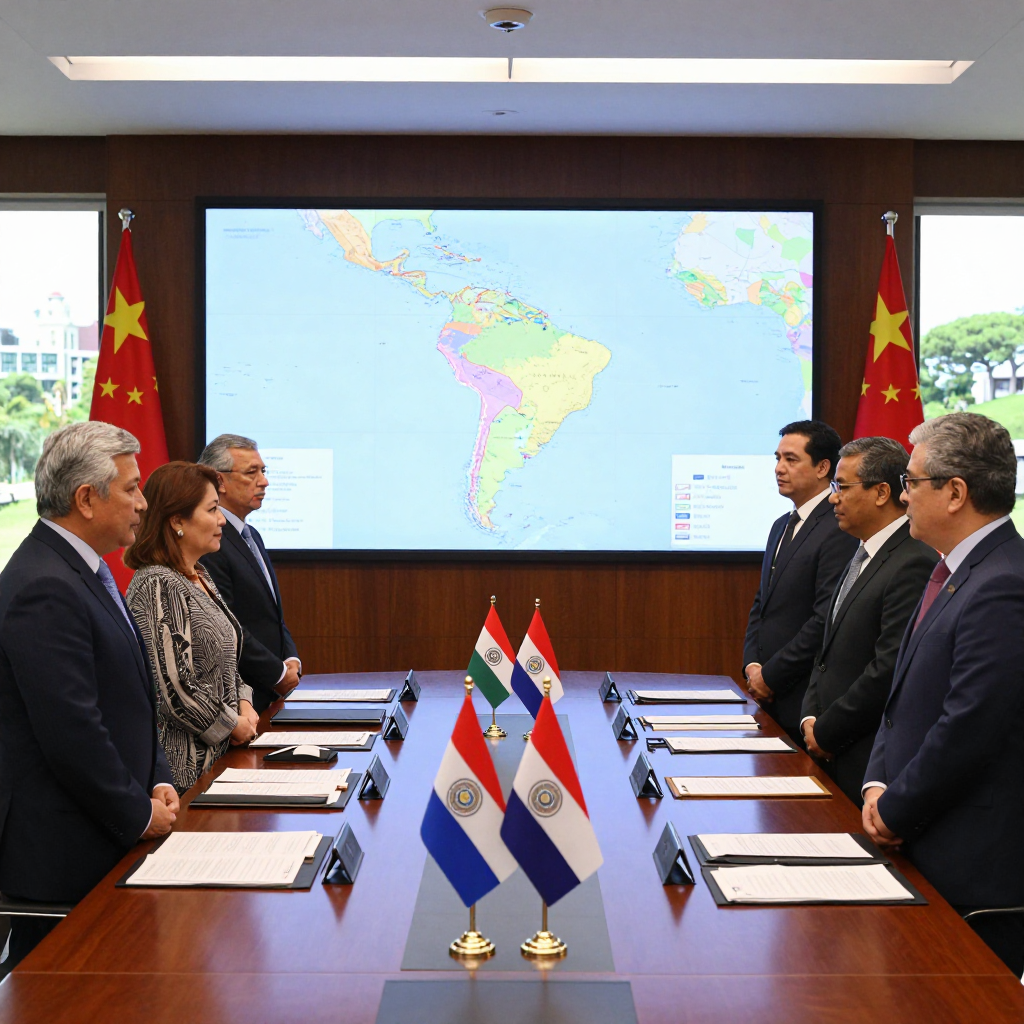
Asunción, Paraguay - In a significant shift that could redefine Paraguay's economic trajectory, sources indicate the government is actively exploring enhanced trade relations with China, a pivotal move that could alter its dynamics within the Mercosur bloc. This strategic repositioning comes amid rising discussions over Paraguay's economic priorities and its relationship with key global markets.
Analysts highlight that Paraguay’s decision to strengthen ties with China aligns with broader regional trends of diversifying trade partners beyond the traditional Mercosur framework. While Mercosur remains crucial for Paraguay, given its historical and economic integration with neighboring countries such as Brazil, Argentina, and Uruguay, the growing global interest in leveraging partnerships outside the bloc suggests a nuanced approach by Asunción. This development could present fresh avenues for international firms seeking to capitalize on Paraguay’s strategic position in South America.
Recent policy signals from the Paraguayan government emphasize efforts to streamline trade facilitation measures, increase investment incentives for Chinese enterprises, and enhance infrastructure projects aimed at boosting connectivity with Asian markets. Such initiatives reflect a clear intent to capitalize on China's Belt and Road Initiative (BRI), which has already yielded substantial economic returns for several Latin American nations. However, critics argue that this shift may strain relations with Mercosur allies who have historically been central to Paraguay's economic growth and trade policies.
Economic experts point out that while Paraguay’s tilt toward China could enhance its export potential, particularly in agricultural sectors where it holds a competitive advantage, it also introduces complexities. Mercosur members may view these moves as a dilution of regional solidarity, potentially affecting future trade negotiations within the bloc. As a result, businesses operating in or considering investments in Paraguay should closely monitor these developments to assess potential shifts in market conditions and regulatory environments.
In addition to the geopolitical implications, there are tangible benefits that Paraguay stands to gain from closer ties with China. Increased investment could drive infrastructure development, including ports and logistics networks, critical for expanding trade flows. Moreover, Chinese demand for commodities such as soybeans, cotton, and meat products positions Paraguay as a key supplier, potentially spurring economic growth and job creation.
However, challenges remain. Paraguay will need to balance these burgeoning relationships with its commitments to Mercosur to avoid alienating its long-standing trading partners. Additionally, ensuring transparency in negotiations and safeguarding domestic industries against potential vulnerabilities will be crucial. As Paraguay navigates these complex dynamics, businesses across various sectors are watching closely, poised to adapt their strategies based on evolving trade patterns and policy directions.