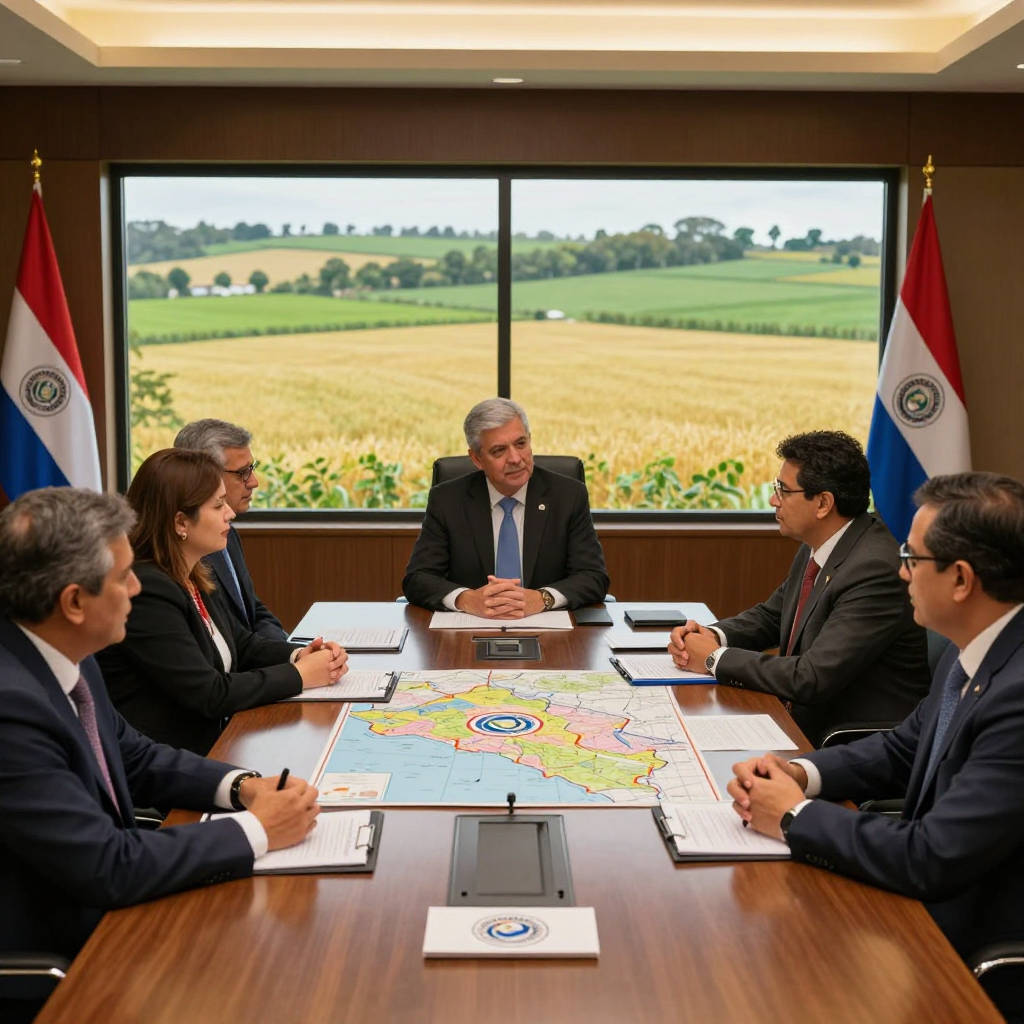
Asunción, Paraguay — In a landscape marked by increasing complexity in global trade, Paraguay is actively seeking to strengthen its economic partnerships within the Mercosur bloc, aiming to capitalize on regional integration while mitigating external market risks. This strategic move reflects Paraguay's commitment to leveraging its central position within South America to drive sustainable growth and enhance its appeal to international investors.
Mercosur, comprising Argentina, Brazil, Paraguay, Uruguay, and Venezuela (currently suspended), serves as a vital platform for Paraguay's trade ambitions. Analysts highlight that Paraguay's role in the bloc has evolved significantly over the past decade, transitioning from a minor participant to a key player in efforts to bolster intra-regional trade flows. With recent discussions centered around streamlining customs procedures and deepening economic convergence, Paraguay's stance aligns with broader Mercosur objectives of reducing barriers and fostering a more cohesive trading environment.
Economic experts emphasize that Paraguay's agricultural sector, a cornerstone of its economy, stands to benefit substantially from enhanced Mercosur cooperation. The country's pristine natural resources and favorable climate position it as a reliable supplier of high-quality products such as soybeans, cotton, and meat. However, while Mercosur presents opportunities, Paraguay must also address structural challenges, including infrastructure deficits and administrative inefficiencies, which could hinder the smooth flow of goods across borders.
In addition to internal reforms, Paraguay is exploring opportunities to diversify its trade relations beyond the Mercosur framework. Discussions with non-member countries, particularly in Asia and Europe, suggest a growing appetite for forming complementary agreements that complement rather than conflict with Mercosur commitments. These initiatives underscore the Paraguayan government's pragmatic approach to balancing regional integration with global engagement.
For businesses operating in Paraguay, the drive toward deeper Mercosur integration carries both promise and uncertainty. While increased trade volumes within the bloc may open new markets and reduce transaction costs, companies will need to navigate potential regulatory changes and ensure compliance with evolving Mercosur standards. Moreover, the success of Paraguay's strategy will depend heavily on the political stability of Mercosur member states and their willingness to implement agreed-upon measures promptly.
Despite these challenges, the overarching sentiment among stakeholders remains cautiously optimistic. Paraguay's proactive stance within Mercosur not only reinforces its position as a reliable partner but also positions the nation as a conduit for broader regional growth. As Paraguay continues to refine its trade agenda, its ability to adapt to dynamic global conditions will play a crucial role in determining its future prosperity.