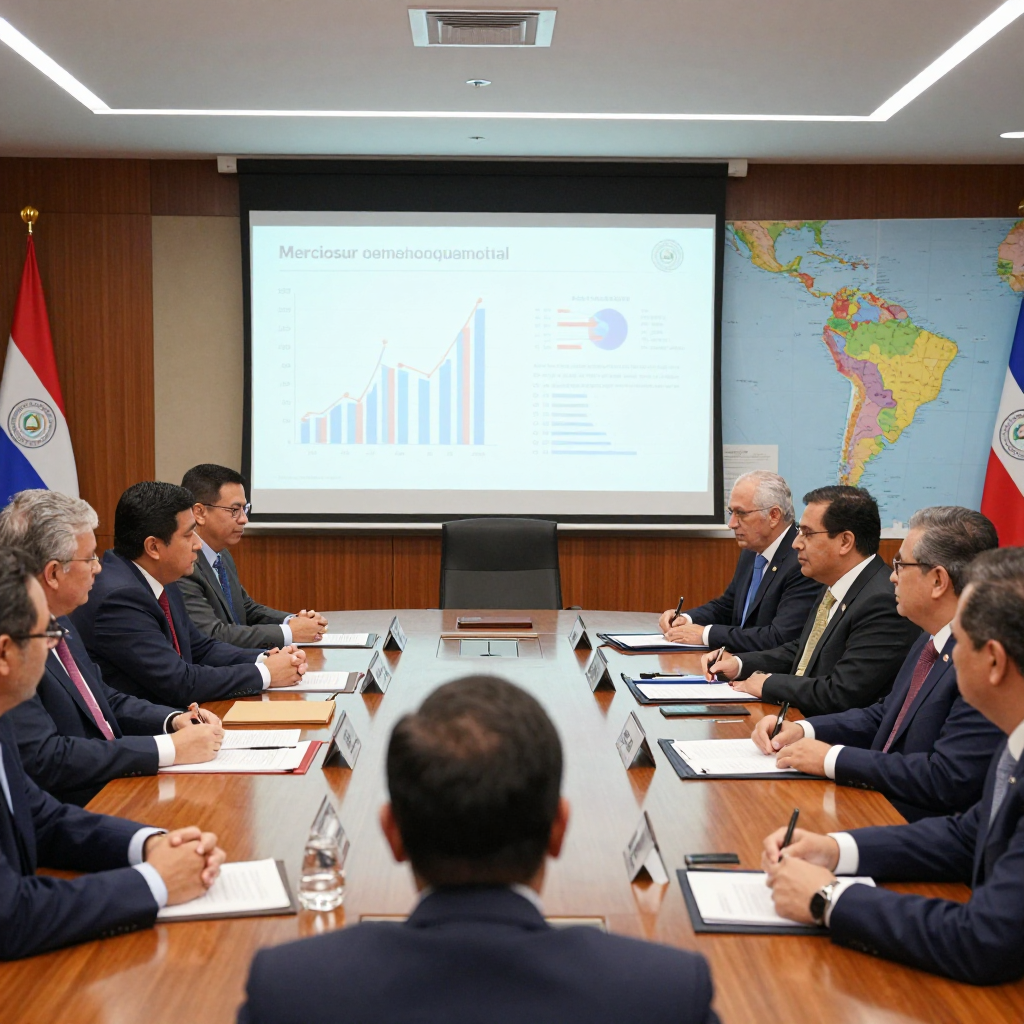
Asunción, Paraguay — In a move that signals renewed commitment to regional integration, the Paraguayan government has unveiled a series of policies designed to enhance its role within Mercosur, the South American trade bloc comprising Argentina, Brazil, Uruguay, and Venezuela. According to reports from officials, these efforts aim to leverage Mercosur’s collective economic power to attract increased foreign investment and stimulate growth in key sectors such as agriculture, manufacturing, and services.
"Mercosur presents a significant market opportunity for Paraguay, with combined GDP surpassing $2 trillion," said a unnamed source within the Ministry of Industry and Commerce. "By aligning our domestic policies with those of our Mercosur partners, we aim to make Paraguay a more attractive destination for businesses looking to expand within the region."
Domestically, the government has been implementing structural reforms aimed at improving the business climate. These include measures to streamline bureaucratic processes, reduce red tape for foreign investors, and modernize infrastructure. Additionally, there is a focus on skill development programs to ensure that the local workforce can meet the demands of incoming industries.
Economists have noted that while these reforms signal a positive direction, challenges remain. "While Paraguay’s intentions are clear, the effectiveness of these policies will depend on their execution and the ability to address longstanding issues like corruption and regulatory consistency," remarked Dr. Martín Fernández, an economist specializing in Latin American markets.
Political analysts point out that the government’s push for closer Mercosur integration comes amid ongoing discussions within the bloc regarding membership and trade agreements. Paraguay seeks not only to benefit from existing deals but also to advocate for policies that prioritize mutual trade liberalization and economic cooperation among member states.
For businesses operating in or considering investments in Paraguay, these developments present both opportunities and uncertainties. While improved integration could lead to enhanced access to regional markets and resources, the implementation timeline remains uncertain, and the success of these policies will ultimately depend on political stability and continued reform momentum.
In conclusion, Paraguay’s focus on strengthening its position within Mercosur, coupled with domestic economic reforms, represents a strategic shift aimed at boosting competitiveness and attracting foreign capital. However, realizing the full potential of these initiatives requires sustained effort and collaboration between government, industry stakeholders, and international partners.
As the nation navigates this path, its success will be closely watched by businesses and observers across Mercosur and beyond, as Paraguay seeks to carve out a stronger role in shaping the region’s economic landscape."