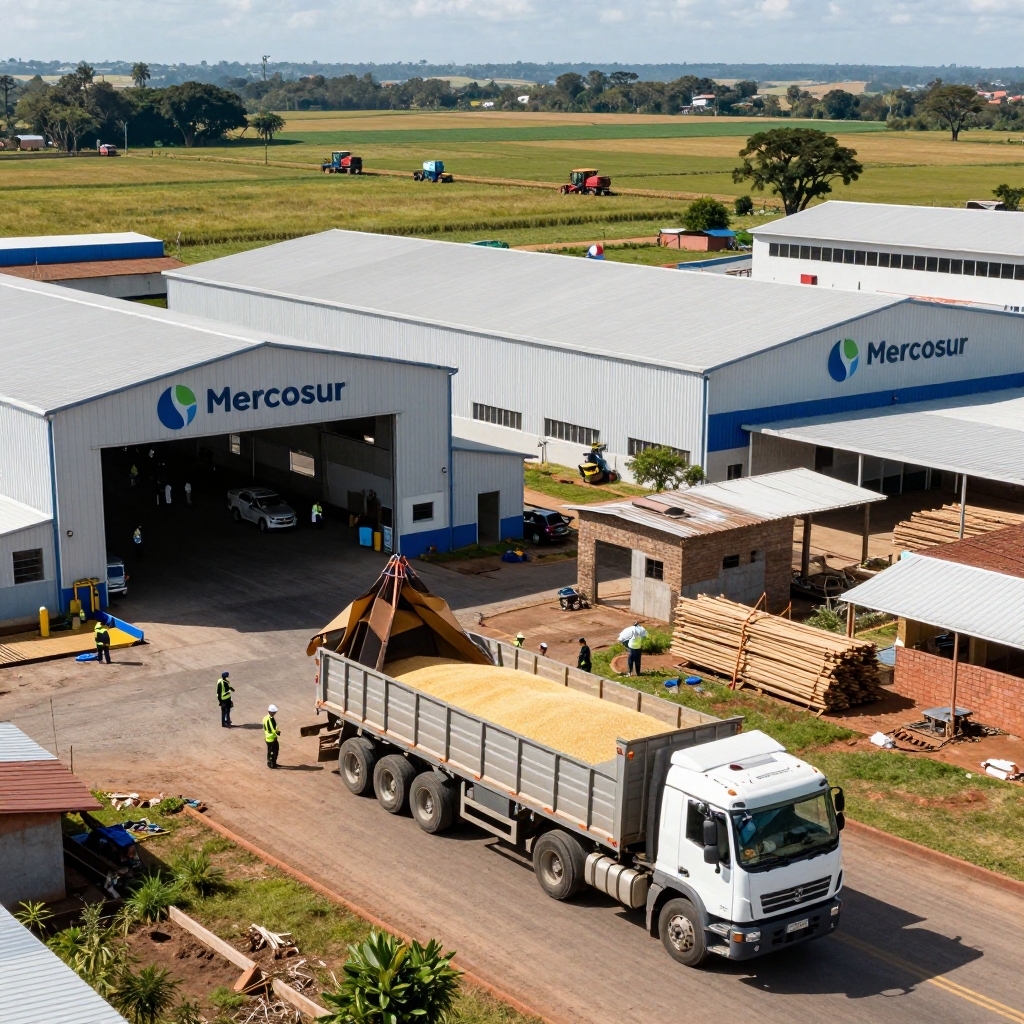
Asunción, Paraguay – Paraguay’s economy continues to show signs of robust recovery and growth, largely fueled by its integration into the Mercosur trading bloc and growing foreign investment inflows. In the third quarter of 2023, the country’s GDP expanded by 4.2%, surpassing pre-pandemic levels and outpacing regional averages. This growth is attributed to several key factors, including rising agricultural exports, which account for nearly 40% of the nation’s total trade volume, and expanding industrial sectors supported by regional partnerships within Mercosur.
Mercosur has played a pivotal role in Paraguay’s economic trajectory. As one of the founding members, Paraguay benefits from duty-free access to the bloc’s market, which includes Brazil, Argentina, Uruguay, and Venezuela. Recent data from the Paraguayan Chamber of Commerce indicates that intra-Mercosur trade grew by approximately 8% year-over-year, reflecting increased demand for Paraguayan products such as soybeans, beef, and timber. Analysts suggest that Paraguay could further capitalize on this momentum by diversifying its export portfolio beyond traditional commodities and leveraging regional value chains.
However, despite these positive trends, Paraguay faces significant hurdles that could impact its long-term economic stability. Infrastructure deficits remain a critical challenge, particularly in logistics and transportation, limiting the efficiency of trade flows and increasing production costs. The World Bank’s latest report highlights that improving road networks and port facilities could boost trade competitiveness by over 10%. Additionally, Paraguay must navigate geopolitical tensions within Mercosur, where internal disputes between member countries occasionally disrupt trade agreements and affect market dynamics.
Foreign direct investment (FDI) remains another crucial driver of Paraguay’s economy. Over the past year, FDI inflows have surged by 15%, with notable interest from Chinese, European, and Brazilian investors targeting agribusiness, energy, and manufacturing sectors. The Paraguayan government has been actively promoting investment incentives, such as tax breaks and streamlined regulatory processes, to attract international capital. These efforts are bearing fruit, with several high-profile projects underway, including a $200 million hydropower plant and a $50 million green technology hub.
Despite these developments, analysts caution that Paraguay must address structural vulnerabilities to sustain growth. According to the International Monetary Fund (IMF), Paraguay’s reliance on commodity exports makes it vulnerable to global price fluctuations. Diversifying the economy, enhancing human capital development, and strengthening institutional frameworks are identified as key priorities for sustained prosperity. Public-private partnerships are emerging as a potential solution, with local businesses collaborating with international firms to implement sustainable development initiatives.
In conclusion, Paraguay’s economic landscape presents a mix of opportunities and challenges as it navigates its role within Mercosur and the global market. While the country is well-positioned to benefit from regional integration and growing investment, addressing infrastructure gaps and fostering economic diversification will be essential for ensuring long-term resilience and competitiveness. As the Mercosur bloc continues to evolve, Paraguay’s ability to adapt and innovate will determine its future success.
**Contact:** [Your Full Name], Business Correspondent, The Asuncion Post **Email:** [email@asuncionpost.com] **Phone:** +[Country Code] [Phone Number]