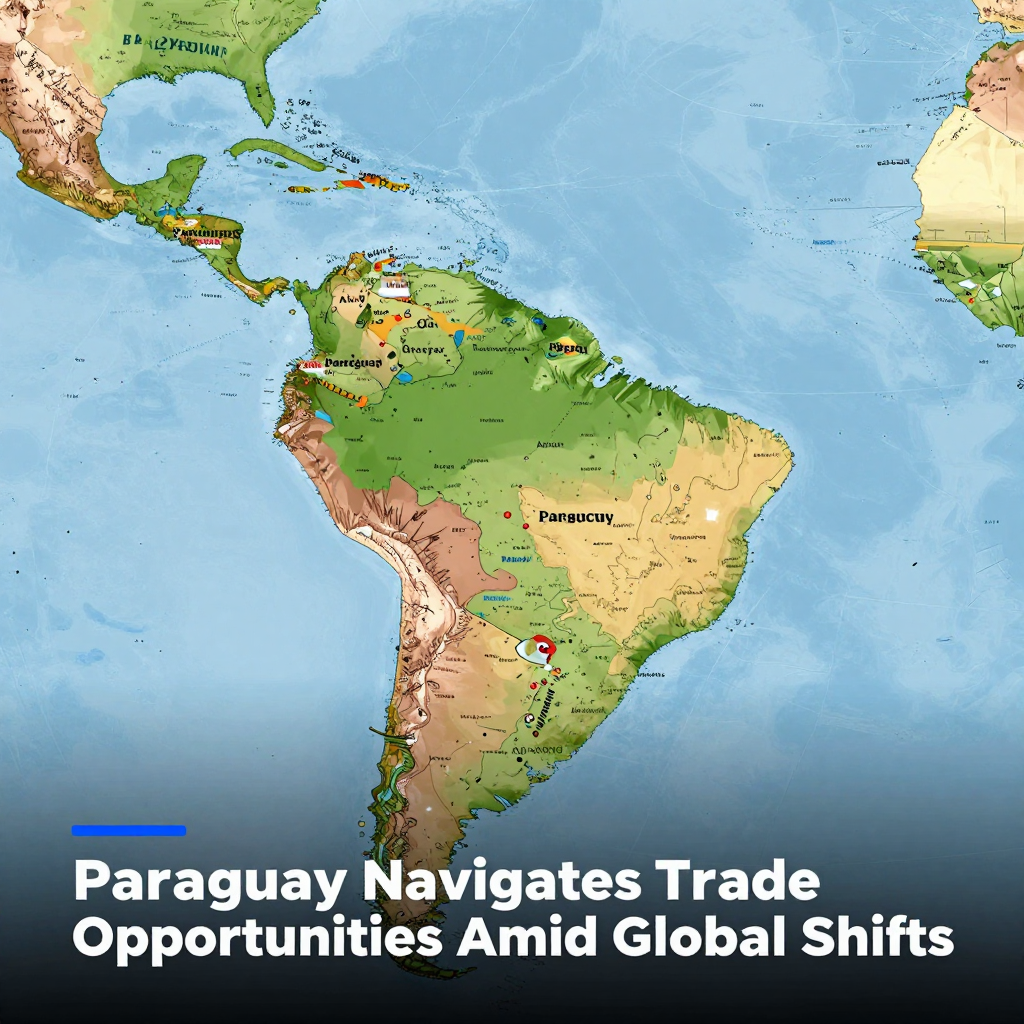
Asunción, Paraguay — In the evolving landscape of global trade, Paraguay continues to play a pivotal role within Mercosur, leveraging its unique position to capitalize on both regional and international opportunities. With a focus on agricultural exports, renewable energy, and strategic diplomatic partnerships, the South American nation is navigating global shifts while maintaining its commitment to economic integration.
Mercosur, the Southern Common Market comprising Argentina, Brazil, Paraguay, Uruguay, and Venezuela, has long been a cornerstone of Paraguay’s economic strategy. As the bloc seeks to strengthen its external trade relationships, Paraguay is actively engaging with potential partners across Europe, Asia, and Africa. These efforts come amid discussions around modernizing Mercosur's trade agreements to better align with contemporary market demands.
Agriculture remains one of Paraguay’s strongest sectors, accounting for over 20% of its GDP and serving as a key driver of export revenues. Soybeans, cotton, and sugar are among the primary commodities exported worldwide. Recent analyses suggest that Paraguay could further diversify its agricultural exports by focusing on value-added products, which would enhance its competitiveness and potentially attract investments from multinational corporations. This shift could also reduce dependency on traditional markets and open doors to new trade agreements.
Beyond agriculture, Paraguay is positioning itself as a leader in renewable energy, particularly hydroelectric power. The country’s significant hydropower potential, including the shared Itaipu Dam with Brazil, provides a competitive edge in regional energy trade. Experts argue that Paraguay may use its renewable energy assets to negotiate favorable trade terms with neighboring countries and even explore partnerships with European nations seeking reliable renewable energy sources.
Diplomatic relations are another critical aspect of Paraguay’s international strategy. The country has been working closely with Mercosur allies to address regional challenges and promote common interests. However, internal political dynamics occasionally pose a challenge to consistent policy implementation. Nevertheless, Paraguay’s proactive stance in multilateral forums, such as the United Nations and the Group of 77, signals its commitment to shaping global trade narratives alongside other developing nations.
Analysts suggest that Paraguay’s future success will depend on its ability to balance regional commitments with broader international ambitions. While Mercosur provides a robust framework for cooperation, Paraguay may need to explore additional free trade agreements to diversify its economic partnerships. The ongoing dialogue with the European Union, for instance, presents an opportunity to expand market access and adopt best practices in areas such as sustainability and digital trade.
In conclusion, Paraguay is at a crossroads where its strategic alignment within Mercosur and potential for global trade expansion could drive significant economic growth. By leveraging its natural resources, diplomatic agility, and strategic partnerships, the nation aims to solidify its place as a key player in the global trade ecosystem. As the world redefines trade priorities, Paraguay’s approach offers insights into how smaller economies can thrive through careful navigation of geopolitical and economic currents.