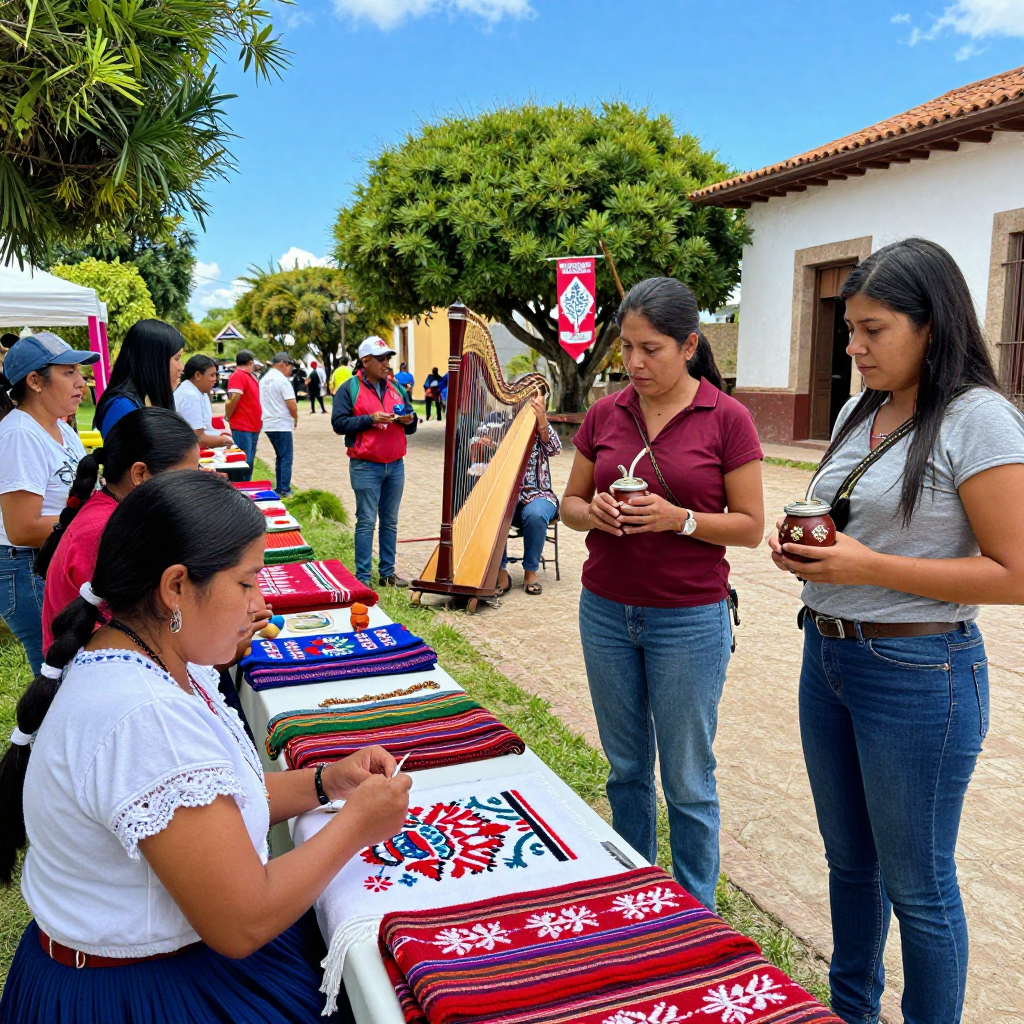
Asunción, Paraguay – Paraguay, known for its vibrant cultural tapestry, is increasingly positioning itself as a destination for businesses interested in merging cultural engagement with economic opportunities. In recent months, the nation has seen a surge in initiatives aimed at showcasing its traditional art forms, such as ñanduti embroidery, mate gourds, and harp music, to a global audience. These efforts are not merely for cultural preservation but are strategically designed to drive economic growth and strengthen ties within the Mercosur region.
The Paraguayan government, along with local chambers of commerce, has been collaborating to organize international festivals and exhibitions that highlight the country's unique artistic traditions. Last month, the annual 'Ñanduti Festival' in Encarnación drew over 20,000 visitors, including delegations from Brazil, Argentina, and Uruguay. The event featured workshops where artisans demonstrated the intricate craft of ñanduti embroidery, a labor-intensive textile art form that has been a symbol of Paraguay's indigenous culture for centuries. This initiative not only celebrates cultural heritage but also serves as a platform for artisans to engage with potential partners who seek to integrate these crafts into international supply chains.
In parallel, the private sector has taken notice of the growing interest in Paraguay's cultural offerings. Several local businesses have partnered with foreign firms to explore joint ventures in exporting artisanal products. For instance, a collaboration between a Paraguayan company specializing in handcrafted mate gourds and a Brazilian distributor has resulted in increased exports to South American markets. Analysts suggest that such partnerships could expand further into Europe and Asia, where there is a rising demand for authentic, eco-friendly products.
Moreover, cultural tourism is emerging as a key driver of economic diversification. The Ministry of Tourism reports a 15% increase in foreign visitors interested in cultural experiences over the past year. This trend is being capitalized upon through the development of specialized tours that combine visits to historical sites with hands-on cultural workshops. Such activities not only support the livelihoods of local communities but also contribute to the overall GDP by attracting higher-spending tourists.
From a regional perspective, Paraguay's cultural diplomacy is resonating well within Mercosur. As a founding member of the bloc, Paraguay is using its cultural initiatives to forge stronger economic alliances with neighboring countries. For instance, the recent hosting of a Mercosur-themed art exhibition in Asunción allowed Paraguayan artists to collaborate with their counterparts from Brazil and Argentina, fostering a sense of shared identity that transcends political boundaries. This cultural exchange may pave the way for more robust trade agreements in sectors such as textiles and agriculture.
While challenges remain—such as the need for improved infrastructure to accommodate growing tourism and the requirement for standardized quality control in artisanal products—Paraguay's approach to leveraging its cultural heritage for business purposes is gaining traction. By embedding cultural elements within its economic strategy, Paraguay is redefining its role within Mercosur and the broader global market. As it continues to balance tradition with modernization, the nation is demonstrating how cultural richness can serve as a competitive advantage in the pursuit of sustainable economic development.