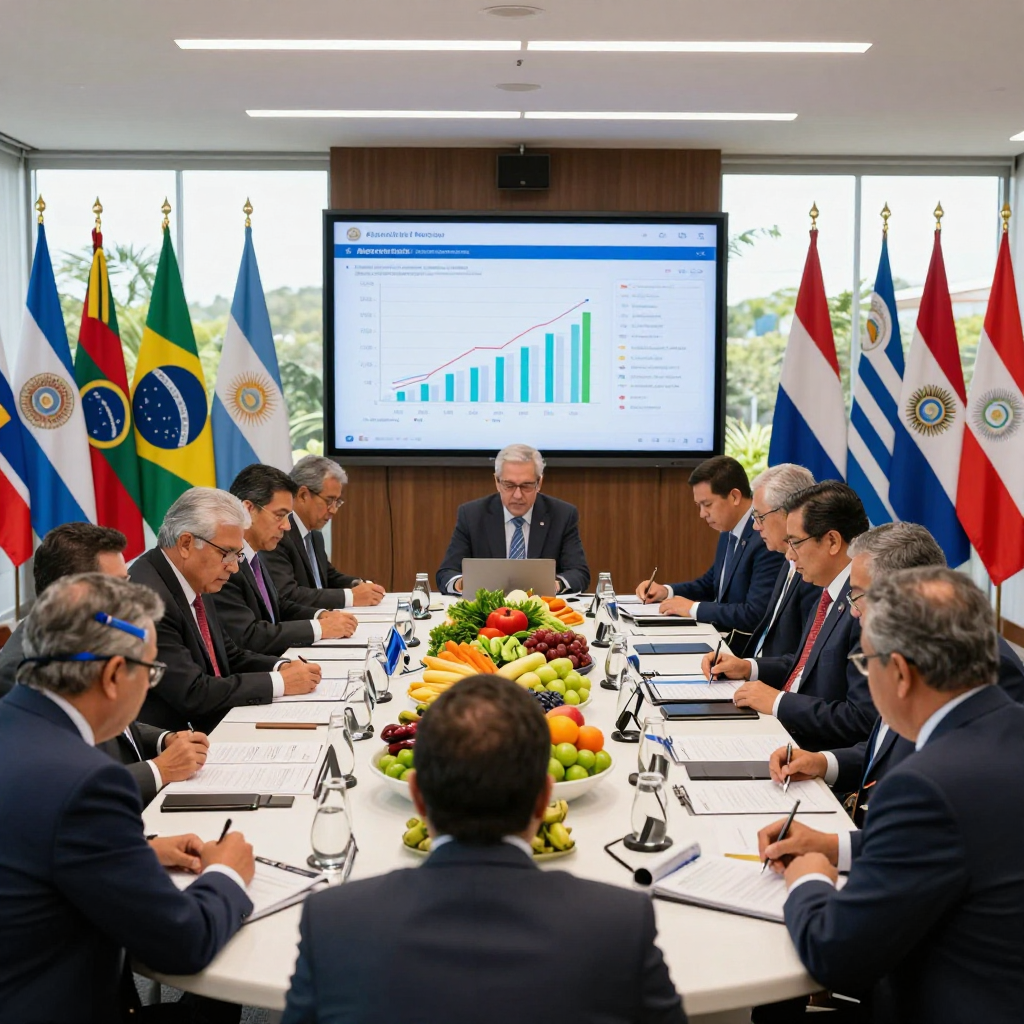
Asunción, Paraguay – In a world where global trade patterns are evolving rapidly, Paraguay finds itself at a crossroads, balancing its traditional reliance on agricultural exports with efforts to diversify its economy through strengthened regional integration. AsMercosur continues to evolve, Paraguay is positioning itself to capitalize on intra-bloc trade and diplomatic ties that could enhance its economic standing on both a regional and international scale.
Paraguay's membership in Mercosur, along with countries like Brazil, Argentina, Uruguay, and Venezuela, provides a unique opportunity to benefit from preferential trade agreements. These agreements have historically allowed Paraguayan exporters to gain access to markets with reduced tariffs, particularly for key commodities such as soybean oil, cotton, and timber. However, recent challenges within Mercosur, including disputes over trade policies and political differences among member states, have forced Paraguay to reassess its strategy while maintaining its commitment to regional cooperation.
Economists note that Paraguay’s primary strength lies in its robust agricultural sector, which has traditionally accounted for a significant portion of its GDP. This sector is well-positioned to benefit from increased trade within Mercosur, especially given growing demand for sustainably sourced agricultural products in neighboring markets. "Paraguay has an opportunity to carve out a niche in sustainable farming practices, which could become increasingly valuable as Mercosur and its European partners explore more environmentally conscious trade deals," said Dr. Luis Silva, an economist at the Paraguayan Institute for Economic Research.
However, the country faces challenges beyond its borders. Global supply chain disruptions, exacerbated by geopolitical tensions and climate change impacts, threaten to complicate Paraguay’s export ambitions. To mitigate these risks, analysts suggest that Paraguay should focus on enhancing its infrastructure, particularly logistics and transportation, to ensure efficient movement of goods both domestically and internationally. "Improved connectivity will not only boost export volumes but also attract foreign direct investment in industries such as manufacturing and renewable energy," noted Ms. María González, head of trade policy at the Ministry of Industry and Commerce.
Diplomatically, Paraguay’s approach to regional relations is shaped by its desire to maintain balance between Mercosur and broader international partnerships. While it remains committed to reinforcing its ties with Mercosur, the country is also exploring opportunities to expand its trade relationships with non-Mercosur nations. This includes discussions with potential partners in Asia and Europe, reflecting a pragmatic strategy aimed at reducing dependence on any single market.
In conclusion, Paraguay’s trajectory within Mercosur and its broader international trade prospects depend significantly on its ability to leverage regional opportunities while addressing domestic and external challenges. With a focused effort on economic diversification, infrastructural improvements, and strategic diplomacy, Paraguay has the potential to emerge as a more resilient and integral player in both regional and global trade dynamics.