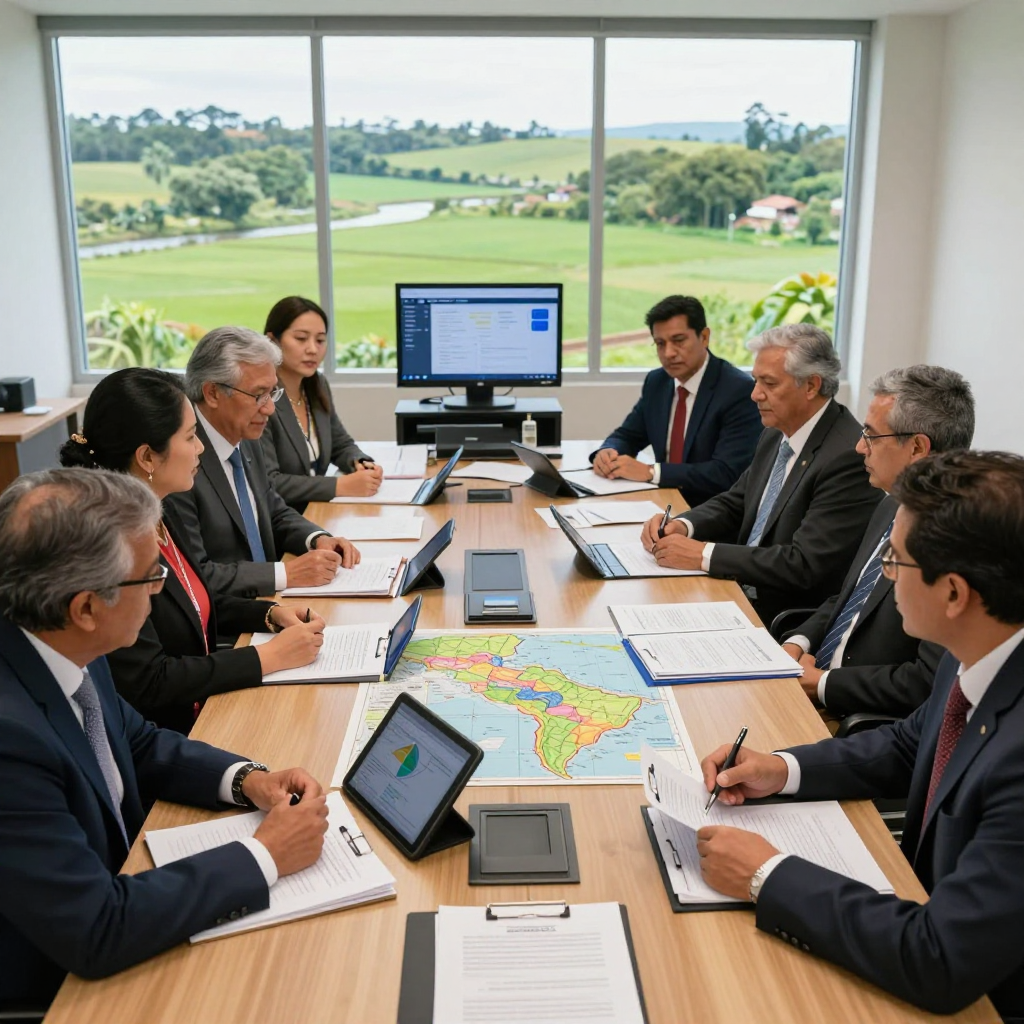
ASUNCIÓN — In a series of high-level meetings across Mercosur member states, Paraguay has emerged as a key player in discussions focused on expanding trade ties and enhancing economic cooperation. These talks underscore Paraguay's growing importance within the bloc and highlight potential opportunities for the country to leverage its unique agricultural strengths and industrial capabilities on the global stage.
The Mercosur Union, which includes Argentina, Brazil, Paraguay, Uruguay, and Venezuela (currently suspended), serves as Paraguay's primary trade platform, accounting for a significant portion of its foreign commerce. Recent negotiations have placed emphasis on improving通关效率 and reducing barriers to trade, particularly for Paraguay's chief exports such as soybeans, cotton, and timber products. These efforts aim to enhance the competitiveness of Paraguayan goods in both regional and international markets.
"Paraguay's role in Mercosur is pivotal," noted Dr. Carlos Álvarez, an economist specializing in regional trade dynamics. "With its rich agricultural resources and strategic geographic position, Paraguay can serve as a crucial link between South America and other trading partners across the globe." Analysts suggest that successful implementation of new trade protocols could lead to a $2 billion boost in annual exports over the next five years, potentially transforming Paraguay into a leading agro-export hub in the region.
In addition to domestic benefits, Paraguay's active participation in Mercosur provides an opportunity to strengthen diplomatic relations with key global trade partners. The country has shown interest in exploring deeper trade agreements with Asian nations, particularly China and India, as well as European Union countries, leveraging Mercosur's collective bargaining power. Such initiatives could help diversify Paraguay's export markets and reduce dependence on traditional trading partners.
However, challenges remain. Infrastructure development, particularly in logistics and transportation, is cited as a critical bottleneck that could hinder Paraguay's ability to capitalize on these opportunities. Improving road networks, expanding port facilities, and enhancing customs efficiency are essential to ensuring seamless movement of goods across borders. Government officials have acknowledged these needs and have begun drafting plans to attract investment in infrastructure projects.
From a macroeconomic perspective, Paraguay's involvement in Mercosur-driven trade discussions reflects a broader shift towards greater economic integration within the Southern Cone. As the nation seeks to solidify its position within the bloc, it also signals a commitment to fostering long-term growth through sustainable trade practices. By prioritizing trade liberalization and infrastructural improvements, Paraguay is not only positioning itself for increased economic prosperity but also reinforcing its role as a vital component of regional stability and growth.
In conclusion, while Paraguay faces hurdles in its quest to maximize the benefits of Mercosur's international trade initiatives, the potential rewards are substantial. With continued focus on improving trade policies, strengthening diplomatic ties, and investing in necessary infrastructure, Paraguay stands at the precipice of a transformative period in its economic history, poised to become a critical player in global trade networks.