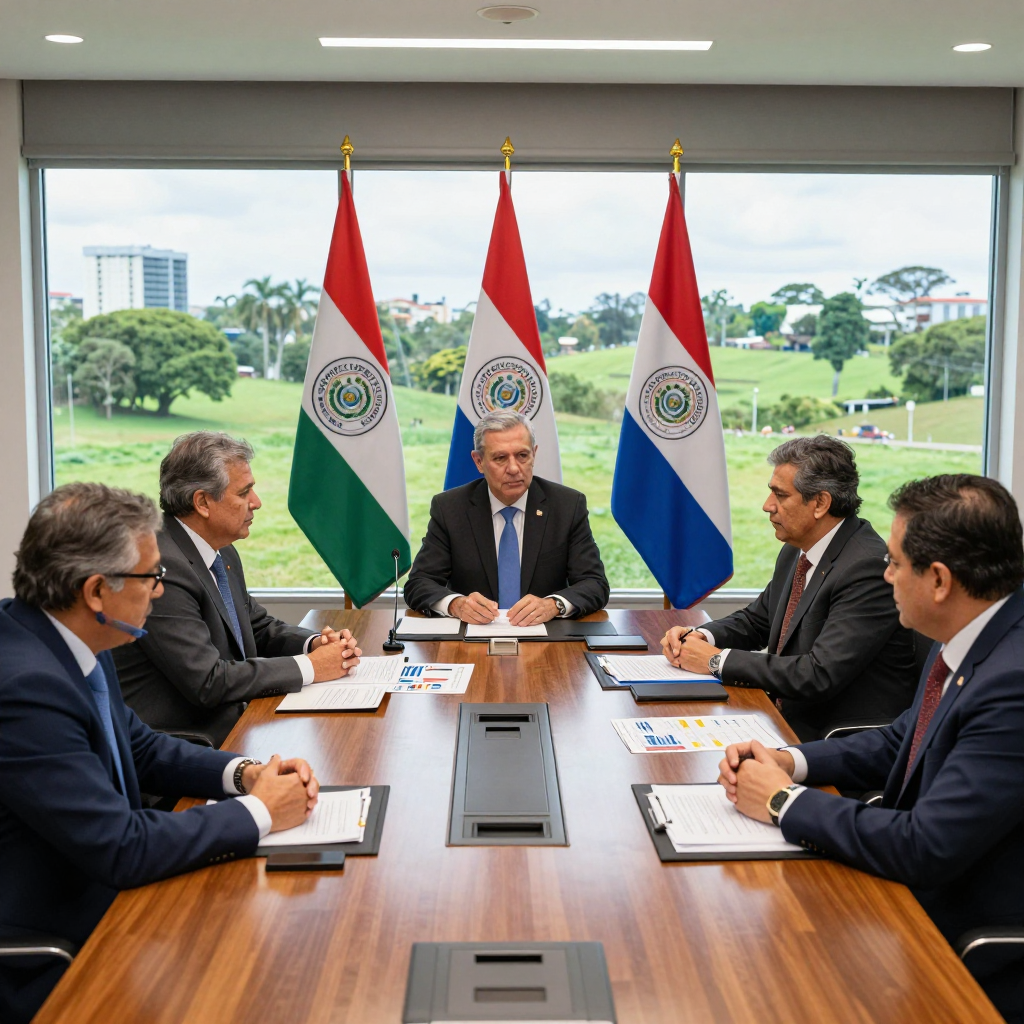
Asunción, Paraguay — In the rapidly changing landscape of global trade, Paraguay is positioning itself as a key player within the Mercosur bloc. Recent diplomatic efforts highlight the nation's commitment to deepening economic integration and exploring potential alliances that could bolster its standing in the international marketplace.
Paraguay, a landlocked country in South America, has historically relied heavily on agriculture as the backbone of its economy. However, recent shifts in global trade policies and the growing need for diversified economic strategies have prompted the Paraguayan government to reevaluate its approach. "Paraguay's focus on enhancing trade relationships within Mercosur could provide significant benefits, including increased market access and reduced barriers to trade," said a spokesperson from the Ministry of Foreign Affairs in Asunción.
The Mercosur bloc, which includes Brazil, Argentina, Uruguay, and Venezuela (under suspension), serves as a crucial platform for Paraguay to expand its economic reach. Recent discussions at the Mercosul Trade Group meeting focused on ways to streamline trade processes and attract foreign direct investment (FDI). These initiatives are seen as pivotal in helping Paraguay diversify its economy beyond traditional sectors such as soybean and cotton exports.
Moreover, Paraguay's geographical location offers unique advantages. Positioned between Brazil, Bolivia, and Argentina, the country acts as a natural logistics hub for the region. "Our goal is not only to strengthen existing trade agreements but also to explore new partnerships that can leverage our logistical capabilities and bolster regional connectivity," emphasized the spokesperson.
Inflation rates, global supply chain disruptions, and geopolitical tensions have heightened the need for robust regional alliances. Mercosur members, including Paraguay, are looking toward deeper integration with Asia-Pacific economies as part of their broader trade strategy. This aligns with Paraguay's efforts to establish more diversified trade routes and reduce dependency on traditional markets.
Business leaders in Asunción are optimistic about these developments. "The potential for growth within Mercosur is immense, especially given the current economic climate," noted a representative from a leading Paraguayan export firm. "We see opportunities for increased collaboration across industries and hope that ongoing dialogue will lead to tangible results."
However, challenges remain. Infrastructure development, regulatory alignment, and coordination among member states are critical factors that require attention. Analysts suggest that while Paraguay's efforts are promising, sustained progress will depend on addressing these challenges effectively.
Looking ahead, Paraguay's active participation in regional dialogues underscores its determination to play a more prominent role in shaping Mercosur's future. As global trade continues to evolve, the nation's ability to adapt and capitalize on emerging opportunities will be closely watched by international business readers and investors alike.